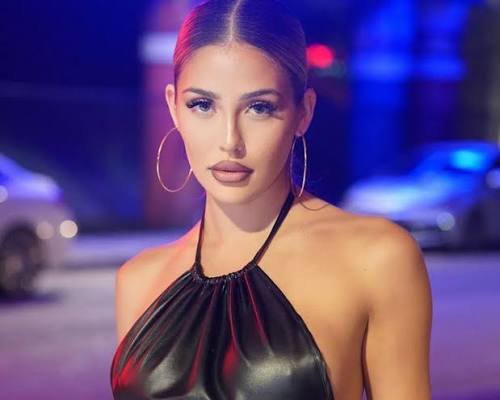
Before getting into Renée Estella’s story, it’s worth being upfront about something most coverage of social media entrepreneurs glosses over: not every influencer-turned-founder story is a unicorn case study, and treating a modest, early-stage business as a “billion-dollar empire” does a disservice to both the subject and the reader. Renée Estella is a real, working model and content creator who has built a genuine social media following and is now building a small, independent fashion label. That’s the accurate version of this story, and it’s still a useful one — just not the inflated version the phrase “swimwear empire” implies.
This piece covers what’s actually documented about her online presence strategy, how it’s connected to her brand ambassador work and her own label, Estella Co, and what’s genuinely transferable from her approach for other creators trying to build a personal brand into something more durable.
From Florida to Miami’s Modeling Scene
Renée Estella, born in Florida in 1993, began building a public modeling and lifestyle presence on social media starting around 2016 to 2018, posting photos and content that gradually built an audience. Her career developed within Miami’s modeling and swimwear-adjacent fashion scene, a market with an unusually dense concentration of swimwear brands, photographers, and events — including Miami Swim Week, one of the industry’s most prominent annual showcases — that creates real, recurring opportunities for models to build relationships with apparel brands without needing a talent agency relationship with a major fashion house.
Building a Following Through Brand Ambassador Work
The clearest, most verifiable part of Estella’s career is her work as a brand ambassador. She has been publicly associated with Matte Collection, a swimwear label, as well as Icon Swim and Fashion Nova, a large fast-fashion retailer known for working with a wide network of social media influencers as part of its marketing strategy. Ambassador and promoter relationships like these are typically structured around content creation — wearing and posting about a brand’s products in exchange for payment, free product, commission, or some combination of the three — rather than equity ownership or a role in the brand’s operations.
This distinction matters for accurately understanding her career: being a recognizable face for swimwear brands and owning a swimwear company are fundamentally different things, and conflating the two — something a number of low-quality aggregator sites covering her have done — creates a misleading picture of what she’s actually built.
The Cross-Platform Presence: Instagram, TikTok, and a Personal Site
Estella’s online presence is genuinely multi-platform, which is itself worth noting as a deliberate, transferable strategy regardless of company size. She maintains an Instagram presence with follower counts reported at various points between roughly 110,000 and over 750,000 depending on the specific account and timeframe, a TikTok account under a similar handle, and a personal website where she’s described selling makeup products and sharing behind-the-scenes photoshoot content directly to her audience, independent of any single platform’s algorithm.
That owned website is the most strategically significant piece of this presence from a business-durability standpoint: a creator whose entire audience relationship lives inside Instagram or TikTok is fully exposed to algorithm changes or platform policy shifts, while a personal site with its own product sales and content gives at least some of that relationship a foundation the creator actually controls.
Estella Co: From Influencer to Independent Designer
Estella’s own label, Estella Co, represents the clearest step from “influencer who promotes other brands” to “founder building her own.” Described on its official site as a women’s fashion label where “elegance meets edge,” with every piece created by Estella herself, the brand is positioned as a small, designer-led operation rather than a mass-market line — she has specifically described the line as 100% handmade, a meaningfully different production and scale model than the brands she’s worked with as an ambassador.
In an interview with Shoutout Miami, Estella described her motivation for starting the label as wanting to create something that authentically represented her personally, rather than chasing a specific market opportunity. She was candid that the process involved considerable deliberation before launching, and that her first product launch was the hardest part of the experience, with lessons learned from it directly informing her approach to subsequent releases — an honest, small-business framing that’s a more accurate and frankly more useful account of early-stage entrepreneurship than a polished “empire” narrative would be.
What Her Actual Online Presence Strategy Looks Like
Based on what’s publicly documented, Estella’s online presence strategy follows a pattern common among independent fashion entrepreneurs building from a personal following rather than outside investment:
- Visual consistency tied to a personal aesthetic. Her content across platforms maintains a consistent visual identity that’s directly extended into Estella Co’s branding, rather than the brand having a separate visual language from her personal content.
- Ambassador work as audience-building, separate from the owned brand. Promoting established swimwear and lingerie labels built reach and modeling credibility without requiring Estella to fund production or inventory herself, while she developed her own label on a separate, smaller, more controlled timeline.
- An owned website as a hub independent of social platforms. Selling products and sharing content through her own site, rather than relying solely on Instagram or TikTok’s native shopping features, gives her more durable control over the customer relationship.
- Transparency about the realities of a first launch. Publicly discussing what didn’t go smoothly in her first Estella Co launch is a credibility-building choice that’s different from the polished, success-only narrative many influencer-led brands present.
A Note on the Net Worth Claims Circulating Online
Several aggregator-style biography sites cite an estimated net worth for Estella in the range of $1 million to $2 million. It’s worth being direct about the quality of that figure: it comes from a type of website that generates similar, formulaic “net worth” estimates for thousands of minor influencers and public figures, typically without any disclosed methodology, financial sourcing, or verification process. There is no comparable reporting from financial or business journalism outlets establishing a reliable net worth figure for Estella, and readers should treat the commonly cited number as essentially unverified speculation rather than a documented fact.
Setting Realistic Expectations: What This Story Isn’t
It’s worth stating plainly what separates this story from the larger founder profiles often covered alongside it: there is no public revenue figure, no funding round, no retail distribution deal, and no valuation associated with Estella Co. It is, by every available public account, an early-stage, founder-made fashion label built and run by one designer, supported by a personal social media following built primarily through modeling and brand ambassador work rather than business strategy content.
That’s not a criticism — most fashion labels, including ones that eventually become significant businesses, start exactly this way. But accurately describing the current stage of a business matters, both for journalistic integrity and for setting realistic expectations for other creators who might look at a headline like “swimwear empire” and assume there’s a replicable playbook for fast, large-scale success that isn’t actually reflected in the underlying facts.
What’s Actually Transferable Here
Setting aside the inflated framing, there are a few honest, transferable takeaways from what Estella has actually done:
- Ambassador work can fund audience-building without funding product development. Working with established brands first, before launching her own label, let her build modeling credibility and reach without bearing inventory or production risk.
- An owned website matters even at small scale. Maintaining a personal site for product sales and content gives a creator more control than relying entirely on social platforms.
- Public honesty about a rocky first launch builds more durable trust than a polished-only narrative. Acknowledging what didn’t go well the first time is a credibility asset, not a liability.
- A personal aesthetic, consistently maintained, is itself a brand asset. Extending the same visual identity from personal content into an owned product line lowers the cost of building brand recognition from scratch.
Frequently Asked Questions
Who is Renée Estella?
A Miami-based model, social media influencer, and entrepreneur known for ambassador work with swimwear and lingerie brands including Matte Collection, Icon Swim, and Fashion Nova, with a following across Instagram and TikTok.
Does Renée Estella own a swimwear company?
No. She has promoted established swimwear and lingerie brands as an ambassador. Her own business, Estella Co, is a separate, independent, handmade women’s fashion label.
What is Estella Co?
A women’s fashion label founded and designed by Renée Estella, described as 100% handmade, with Estella speaking publicly about lessons learned from her first product launch.
What is Renée Estella’s net worth?
Some sites estimate $1 million to $2 million, but these figures come from unverified aggregator sites without disclosed sourcing and should be treated with significant skepticism.